

Online Arbitrage · Reviewed October 2026
Advanced Online Arbitrage Tips for Amazon FBA
Ten practical tips for Amazon online arbitrage, updated for 2026 rules on FNSKU labels, beauty and health approvals, cash-back terms, and current tool pricing, with the techniques that still work.
Online Arbitrage (OA) sourcing for Amazon FBA sellers is a great way to run an ecommerce business without warehouse or office space. You can run your Amazon OA business from a laptop anywhere you can get a WiFi signal, and use one or more third-party prep services to process and ship your items to Amazon.
There are many Online Arbitrage tips that can help you scale this business model, whether you are brand new to ecommerce or have been selling on Amazon since 2000. Below are 10 tips you can use right now. Even if you already use arbitrage software, these strategies can help you earn higher profits, see fewer returns, and have a better OA experience.
This page was originally written in 2019. It was last reviewed on October 8, 2026, and the tips that changed since then are marked below.
Last reviewed: October 8, 2026
Seller Essentials may earn a commission from purchases through links on this page.
Key takeaways
- A leads list and a virtual assistant save the most sourcing time, and a prep service can handle inspection and labeling.
- Beauty and health items often need Amazon approval, and Amazon sets long shelf-life requirements for them, so check before you buy clearance stock.
- Since March 31, 2026, resellers generally have to put an Amazon barcode (FNSKU label) on every unit sent to FBA.
- Cash-back bonuses come with terms. Read them, and do not click around between a cash-back link and checkout.
- Use one profit calculator, set Keepa alerts, and reprice on a schedule, by hand or with a tool.
1) Use an OA Leads List
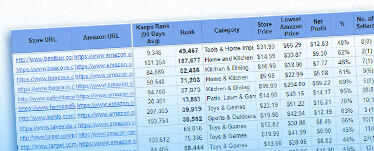
Most OA sellers find it impossible to research enough products on their own to run a full-time Online Arbitrage business. Arbitrage opportunities are usually tied to the item being on sale, and replenishable inventory is hard to find. That forces you to search for new inventory opportunities constantly.
The best way to get past this is to use other people’s time and expertise. A leads list is a feed of products other researchers have already found, usually with the buy link, the sell price, and an estimate of profit. You still decide what to buy, but you start from a short list instead of a blank search bar. When you do search on Amazon yourself, see how to get past Amazon’s 7-page search limit so you can reach more products than a regular search shows.
A virtual assistant is a second option. A VA can search retailers, check leads against your buying rules, and place orders to your instructions. Training one takes time, so many sellers start with a list and add a VA once their buying rules are written down.
Here are some leads lists to check out. Some offer free trials or discounts for our audience.
How to get more out of a list:
- Check every lead yourself before you buy. Confirm the price, the product match, and that your account can sell it. Amazon marks items you cannot list with an “Apply to sell” button when you search the product under Add Products.
- Run the numbers with a calculator that includes referral fees, FBA fees, and your shipping to the prep service (see tip 8).
- Start with a small test buy before you order large quantities of a lead.
- Note which lists produce leads you actually buy, and drop the ones that do not.
Pro Tip #1: Use multiple lists if you want to see the fastest growth.
Pro Tip #2: Combining this with one or more online arbitrage prep services helps you scale more quickly and efficiently.
2) Check the Clearance Section, Especially Health and Beauty
At some point, manufacturers may decide to “improve” an item, or they discontinue it if it isn’t selling well, or when they go out of business. Some people like the original version better than the “new and improved” one, and will often pay a premium for it or for an item that is no longer made.
Just because something didn’t sell well for a manufacturer or retailer doesn’t mean it won’t sell well online. When the buyer can no longer get it from the usual source, they are left with limited choices. If the only places they can find the item are Amazon or eBay, they will pay the price or go without. Here are a few examples of arbitrage opportunities with retail clearance items:
Years ago I found a discontinued hair coloring product at a retail store. There were 18 units left at $1 each. The retailer was glad to clear them out and I was glad to add them to my inventory. I sold them for $65 each on Amazon, and several buyers bought more than one (one customer bought six). The retailer would have struggled to find enough local shoppers to buy one or two. Amazon reaches customers all over the world.
Another manufacturer went out of business and a major retail chain put its products on clearance. Within a couple of months the in-store price fell from $25 to $6.25, while the items were selling for $60 and more on Amazon.
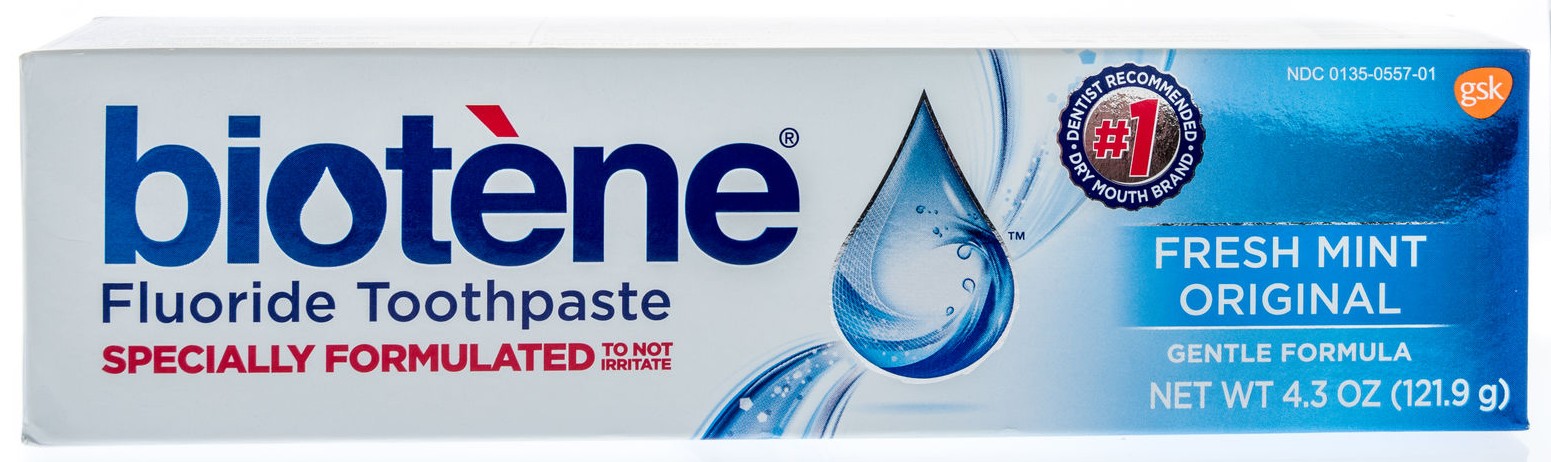
The original Biotene toothpaste jumped in price on Amazon after the company released a “new and improved” version. Reach dental floss was sold to Listerine and repackaged. The “new” product was essentially the same, yet prices for some of the original Reach packages went through the roof.
What has changed since 2019: health and beauty is not as open on Amazon. Beauty and Health and Personal Care are categories where Amazon may require approval before you can list. Before you buy, search the product under Add Products in Seller Central. If you see “Sell this product,” you can list it. If you see “Apply to sell,” approval is required, and “Show limitations” explains why. Applications are typically reviewed in 2 to 7 business days, and Amazon asks for purchase invoices dated within 180 days.
Expiration dates matter even more. Amazon expects a product to arrive at the fulfillment center with enough shelf life left to be used in full, plus an additional 90 days. Amazon’s expiration guide lists personal care and beauty products such as shampoo, soap, lotion, makeup, and fragrance at 900 days before expiry on arrival. A clearance item with a short date is often a poor FBA buy, even at a deep discount. Read Amazon’s expiration date rules, and contact the manufacturer or check online to understand its date codes.
Think about eBay too. Items that Amazon will not take, or that you cannot get approved for, can often sell on eBay. eBay’s fees are similar to Amazon’s and its rules are more relaxed, although restricted brands and expiration dates still apply. Treat it as a second outlet for clearance finds instead of a reason to skip the checks above.
Pro Tip: If you find out that a major manufacturer is discontinuing its fragrance-free laundry detergent, buy all you can find of it. Allergies are one of the main reasons customers stay loyal to a single product.
3) Purchase Enough to Qualify for Free Shipping
Online Arbitrage orders often ship free once you reach the retailer’s threshold. Target’s free shipping starts at $35, and a Target Circle Card or Circle 360 membership can also qualify you. Below that, Target charges $5.99. For other online retailers the threshold may be $49, $75, or $99. When you place OA orders, know the minimum you need to spend for free shipping, and check it before each order because retailers change it. If you source on Amazon, you can’t use Prime benefits to buy for resale. Our Prime vs Prime Shipping guide explains the rule and how free shipping works without Prime.
Pro Tip: Free shipping is usually the slowest shipping method. Sometimes it is better to pay for shipping to get your items, and get them to Amazon, more quickly, especially during the busy holiday shopping season.
4) Be Careful Using Cash-Back Websites
Cash-back sites exist to send traffic to websites that pay affiliate commissions. The commission is almost always tied to a purchase, so the cash-back site gets paid when the person it referred buys something. It then gives part of that money back to the buyer, hence “cash back.”

The problem is that some “cash-back” sites give back nothing, and keep all of the commission. When you click their link, they drop a cookie (a small piece of code) in your browser that tells the retailer which site sent you. The referring site is credited a percentage of what you spend. Some of these referrers say no cash back is available after you click through, and in some cases that is true. In others, they just keep the commission.
Here are a few tips:
- Look for cash-back sites with affiliate relationships at the most retailers. We use Rakuten, Mr Rebates, and Be Frugal, since they consistently have some of the highest rebate percentages. Our leads lists page also has a cash-back section. Before you count a rebate on a gift-card purchase, or on an order paid with a gift card, read how to use discounted gift cards to check whether the offer applies.
- Avoid the temptation to click around. Once you click through to a retailer from a cash-back link, do not click another link until you have made your purchase. If you click another cash-back or coupon link in the middle, its cookie can overwrite your first one, and you risk getting nothing back.
- Install the browser extensions. They check for rebates when you open a new page and show any available cash back in a popup.
Current sign-up offers (terms apply):
- Rakuten: New members get a $50 Referral Sign-up Bonus after placing qualifying orders totaling a minimum of $50 within 90 days of becoming a member. You must be located in the 50 United States or D.C. to qualify. Offer may be modified or cancelled anytime. Get started with Rakuten.
- BeFrugal: New members can earn a $10 sign-up bonus when they join through our link. Terms apply. Join BeFrugal.
Seller Essentials may earn a commission if you sign up through links on this page.
5) Open, Inspect, and Label Every Order
Resist the urge to send OA products to Amazon without inspecting every item. If you use a prep service, it should be doing this for you. If you receive your own shipments, check them yourself instead of slapping a label on the box and forwarding it. You need to check the condition of the items, make sure the order is correct, and look for price labels and store tags. If you are buying electronics to resell, also check that wireless items show an FCC ID.
What has changed since 2019: every unit needs an FNSKU label. Amazon ended commingled FBA inventory on March 31, 2026. Resellers who do not hold the Brand Representative role in Brand Registry now have to apply an Amazon barcode (FNSKU label) to every unit they send to FBA, even when the product already has a manufacturer UPC. Units that arrive without a required label can be classed as defective and may not be eligible for reimbursement. Inventory that was already in an Amazon warehouse before the change was grandfathered. In practice, you inspect first, and then label: you cannot label a unit you have not opened and checked, and you do not want to find damage after the label is on. A prep service can do both steps for you.
Condition: Certain stores (like Walmart) often ship orders with no dunnage or packing materials, so items may be damaged in transit. Others (like GameStop) ship items pulled from retail shelves, so the “new” games you buy from their website are often opened when they arrive. Never assume something is ready to send to Amazon FBA without inspecting it.
Accuracy: There will be times in Online Arbitrage when you receive items that are not what the website showed when you ordered. Maybe they showed the new version and sent the old one, or sent the wrong color or quantity. Always confirm the items shipped match the order you placed.
Price labels: Retailers like Kohl’s and Disney add price stickers to their merchandise. If the price is higher than what you will charge, you may not need to remove it. But imagine an Amazon customer who just paid $50 finding a $20 price tag the seller did not bother to remove. Disney price tags are often added during manufacturing and are sometimes inside the retail packaging.
Pro Tip: It is much easier to make a return in the box the item was shipped in, so check your orders before you recycle the shipping box.
6) Use Multiple Prep Services
Setting up with an additional prep service in advance can be a smart business decision. Not all prep services in existence today will still be in business in 2 to 5 years. Do not wait until you need a new one to start looking. If one goes out of business, all of its clients will be scrambling to set up with a new service, so be ready now. Establish a relationship with more than one prep service, send in some items, and be ready just in case. You may also find that you prefer the way one works over another.
Pro Tip: Our prep services page lists many prep centers.
7) Render unto Caesar…

Wholesale purchases and private label imports do not incur sales tax, so there is no added benefit to using a prep service in a tax-free state for them. Orders placed online, however, are subject to the sales tax of the state where they ship. Using a prep service in a tax-free state for OA purchases could save you money. The tax savings alone will often more than pay for the prep charges. But keep in mind that the money you save can be quickly lost if inbound shipments are delayed, or if it costs more to get your products from the prep service to the Amazon fulfillment center. If you buy from Amazon itself, you can also add a sales tax exemption to your Amazon account and skip the tax at checkout.
Pro Tip: Why do resellers pay sales tax in the first place? Some retailers are not fans of resellers. By ordering in smaller quantities and paying the sales tax, you may be less likely to land on their radar than if you make large purchases and use your sales tax certificate.
8) Time Is Money
You have a lot of choices when it comes to analytics tools, both free and paid. The starting point is a profit calculator. Amazon provides a free FBA Revenue Calculator that shows your fees and net profit for an ASIN. Third-party calculators go further, and our guide to the best Amazon FBA calculators compares them.
As your business grows, you will recognize that your time has value, and you are spending a lot of it on things that can be done quickly and inexpensively with a tool. The tools worth having do a few jobs on the product page itself:
- Calculate profit and ROI from your buy cost, using current fees.
- Show hazmat flags, restrictions, and whether your account can sell the item.
- Show variations, so you can see which sizes and colors sell.
- Show competitor stock levels. You used to have to add 999 units to your cart for each seller, one at a time, to see how much inventory they had. Some tools now show this for you.
My advice: pick one tool and use it. Browser extensions that do overlapping jobs compete for space on the page and can cause something to stop working, often something unrelated to what you are doing, which makes the problem hard to find. Choose one calculator extension that covers what you need, turn off the others, and stick with it long enough to learn it. See the FBA calculator guide for options.
9) Set Keepa Tracking Alerts

This one is a no-brainer. When you find something that Amazon is selling at a discount, and you can resell it for a profit (known as an Amazon to Amazon flip), set your Keepa extension to alert you when the item reaches your target buy price again. If Amazon puts the item on sale again, you will get an email or text alert and can buy before it sells out.
Here is an example. Once or twice a month, Amazon receives an item into inventory that it sells for $20 a unit. It sells very quickly. The rest of the month Amazon is out of stock, and the other sellers sell it for around $60. It does not sell a huge number of units, but it sells well enough that I have my Keepa alerts set for when Amazon is in stock. Four other sellers also have alerts set for this item (Keepa shows this). They all set their alert for $19.99, and Amazon sells it for $20, so Keepa never alerts them because their target price is never reached. I buy all of Amazon’s supply at $20 and resell it for around $60.
If you are serious about Online Arbitrage, get the paid version of Keepa. The sales graph feature alone is worth the subscription. Keepa’s paid plan costs 29 euros a month (or 290 euros a year). That works out to about $32 a month, or about $324 a year, at the European Central Bank’s October 8, 2026 rate of $1.1186 per euro. Keepa bills in euros, so the dollar amount moves with the exchange rate. Click this link to begin using Keepa today.
10) Use a Repricer
Automatic repricers are tools that, when properly set up, can keep you in the Buy Box more often, so you sell more inventory at a higher velocity.
There are significant costs involved with many repricers, and new sellers may find they are not an option yet. Until your business reaches the level where an automatic repricer makes sense, you can perform many of these tasks by hand. We recommend moving to an automatic repricer as soon as you can. Our Amazon repricers page lists repricers for smaller sellers all the way up to enterprise-level businesses.
What about Amazon’s free repricing? Amazon offers a free tool called Automate Pricing, which lets you set rules such as staying a set amount below the Featured Offer price. It is worth knowing about, but many sellers do not use it, and the reason is fair: Amazon’s goals are not always the same as yours. A rule built around winning the Featured Offer will not always give you the most profit. If you try it, set your minimum price carefully, and check the results against your own numbers before you rely on it.
Here are 3 manual repricing techniques that help you sell more inventory if you do not have an automatic repricer. You can reprice by Age, Quantity, and Price. Do these every 1 to 2 weeks to keep your inventory selling.
To begin, click the Inventory tab in Seller Central. Select the “Active” and “Amazon” filters at the top, so you only see active inventory in the FBA warehouse. Scroll to the bottom right of the page and select “50 results per page.”
Pro Tip: We recommend working with only 50 results per page (or fewer, if you are a new seller). Trying to reprice 100 or 250 items at a time could make the page freeze or fail to load. And if you lose power while working, you will not have to redo as many prices.
Technique 1: Price
From your Manage Inventory page, click the column header “PRICE” to sort your inventory from highest price to lowest. Scroll to the bottom and select page 4. Reprice this page. After saving, go back and reprice page 3, then 2, then 1, in that order. You have now repriced your 200 highest priced items.
Technique 2: Age
From your Manage Inventory page, click the column header “DATE CREATED” to sort your inventory from oldest to newest. Reprice the first 4 pages in order (1, 2, 3, 4). You have now repriced the 200 items that have been in inventory the longest.
Technique 3: Quantity
From your Manage Inventory page, click the column header “AVAILABLE” to sort your inventory by quantity in stock, highest to lowest. Scroll to the bottom and select page 4. Reprice this page. After saving, go back and reprice page 3, then 2, then 1, in that order. You have now repriced the items with the most units in stock.
Note: Reprice from page 4 to page 1 when repricing by Price and Quantity, but from page 1 to page 4 when repricing by Date. This lets you do four full pages without the items changing order.
Weekly manual repricing will help you sell overpriced and stale inventory, and keep you price-competitive on items where you have a lot of stock. Repricing software exists that automates this process, repricing individual ASINs as often as every few minutes based on criteria you set.
Pro Tip: If you use the Minimum and Maximum Price settings in Amazon, be careful not to reprice above your maximum or below your minimum. If you do, your listing becomes “stranded” and you will not appear in the list of sellers for that item.
Frequently asked questions
Is online arbitrage legal on Amazon?
Buying authentic products from retailers and reselling them is generally allowed under Amazon’s seller policies, but you must follow its rules on category approvals, product condition, expiration dates, and restricted brands. Check each product under Add Products before you buy.
Do I have to label every item I send to FBA?
Since March 31, 2026, resellers who do not hold the Brand Representative role in Brand Registry generally have to apply an FNSKU label to every unit. Brand owners with eligible manufacturer barcodes are treated differently, and sellers with a GTIN exemption or products with no manufacturer barcode still use Amazon labels.
Why can’t I sell some health and beauty items on Amazon?
Beauty and Health and Personal Care are categories where Amazon may require approval. If you see “Apply to sell” for a product under Add Products, you cannot list it until you are approved. Expiration rules add another limit on clearance stock.
Are cash-back sites worth using for arbitrage purchases?
They can be, when you use sites that really pay out, read the sign-up terms, and do not click another link between the cash-back link and checkout. Bonuses have conditions and can change.
Do I need a prep service for online arbitrage?
No, you can receive, inspect, label, and ship items yourself. A prep service saves time, and one in a tax-free state can save you sales tax on online orders.
How can I reprice without paid software?
You can reprice by hand every 1 to 2 weeks using the sorting techniques in tip 10, or try Amazon’s free Automate Pricing rules and compare the results to your own numbers.
Arbitrage Guides
More Online Arbitrage Guides and Tools
These ten tips are one part of running an online arbitrage business on Amazon. The Seller Essentials arbitrage hub collects our guides on sourcing, leads lists, calculators, repricers, and the marketplace rules that affect resellers.
About the author

Cite this article
Purdy, G. (October 13, 2019; reviewed October 8, 2026). Advanced Online Arbitrage Tips for Amazon FBA. Seller Essentials. https://selleressentials.com/online-arbitrage-tips/
Sources
Target Help: Shipping costs and eligibility · Seller Central Help: Approval requirements · Seller Central Help: Expiration dates on FBA products · PPC Land: Amazon ends FBA commingling and requires FNSKU labels · BeFrugal: Terms and conditions · Seller Central Help: Automate Pricing rules · European Central Bank: Euro reference rates · AMZ Selling Tools: Keepa pricing
Advertisement
